



USB Device Not Recognized? Troubleshooting USB Extenders and KVM Systems
A USB device may work normally when connected directly to a computer but stop working after a USB extender or KVM system is added.

In the Pro AV and IT integration landscape, finding a solution that fits every environment is a constant challenge.
If you prioritize lossless quality and zero latency, HDBaseT is often the only choice, yet it is expensive and requires high-spec cabling. Alternatively, H.264/H.265 (AVoIP) offers network flexibility and cost efficiency but often suffers from visible compression artifacts and frustrating mouse latency.
SwiftSync is a high-efficiency 1G compression technology that bridges this gap, transmitting 4K60 video over standard 1G network infrastructure while preserving original image clarity and near-zero-latency operational fluidity.
Designed for seamless deployment, it optimizes bandwidth efficiency to ensure sufficient headroom for other critical equipment, even in complex, high-traffic environments. For professional AV, IT, and industrial applications, SwiftSync is the practical solution for combining high-end transmission quality with the cost efficiency of standard 1G infrastructure.
For a side-by-side performance analysis, view our HDMI Transmission Technology Test Report: HDBaseT 3.0 vs H.265 vs SwiftSync.
SwiftSync technology is built for versatility, allowing system integrators (SIs) to adapt to various project scales through different configurations.
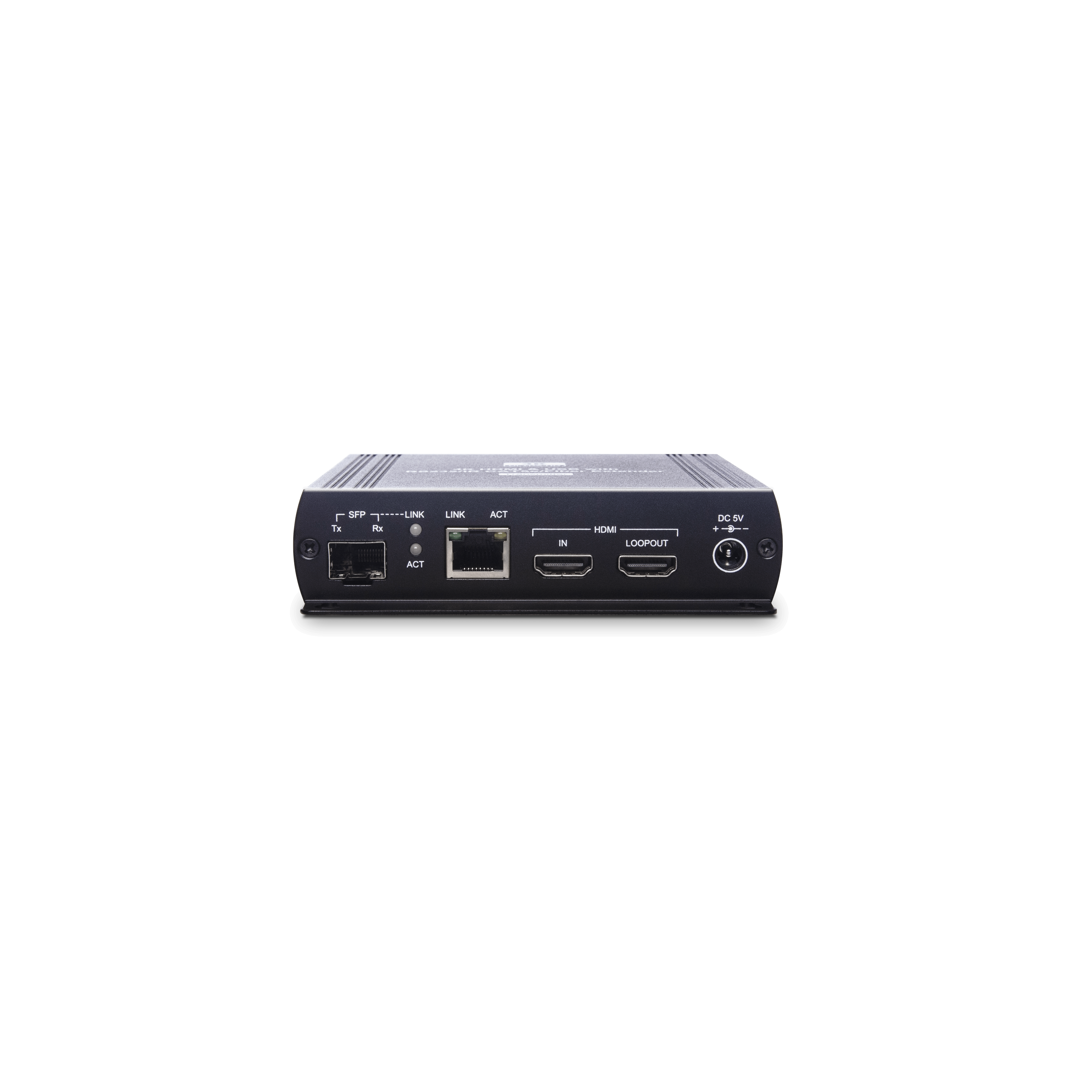
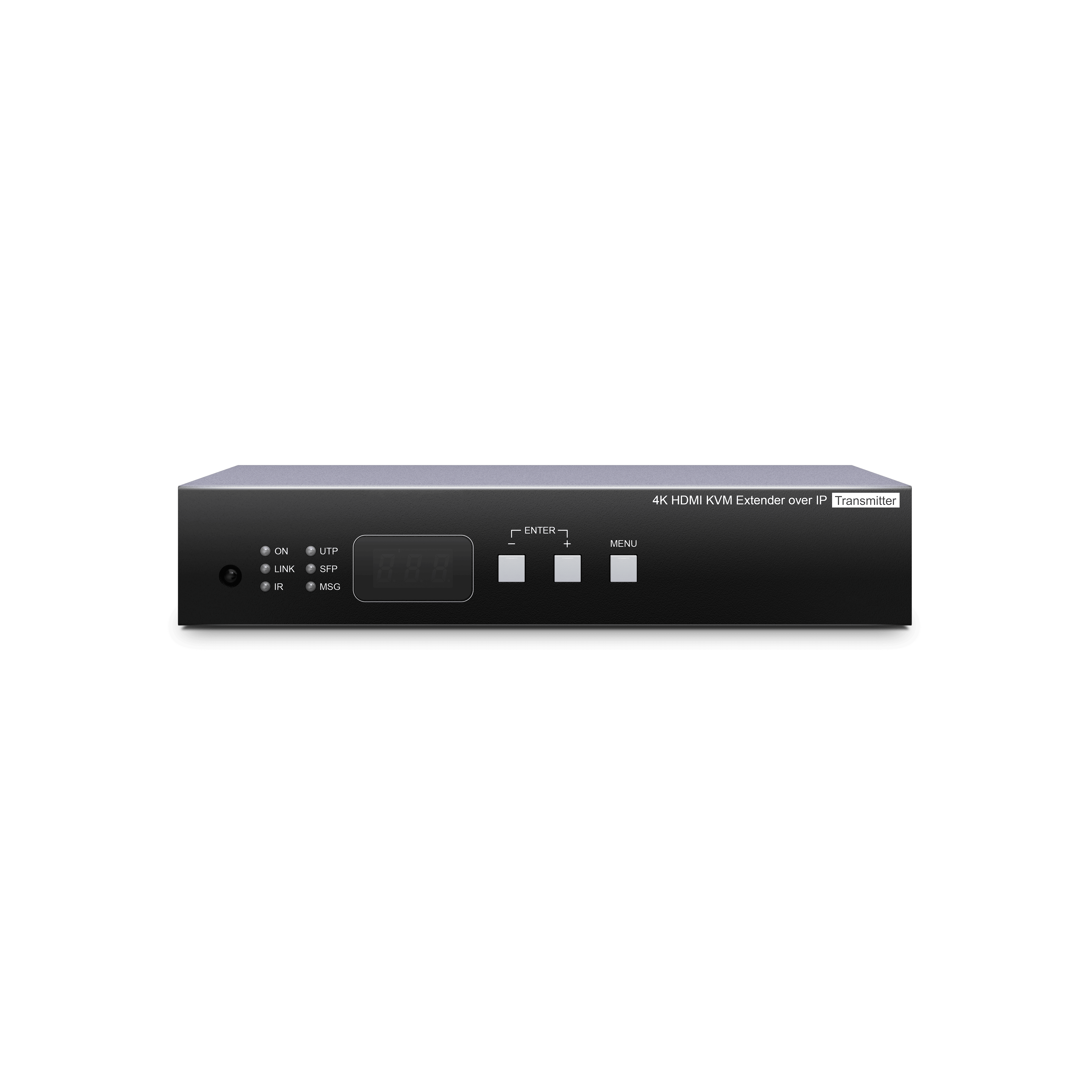
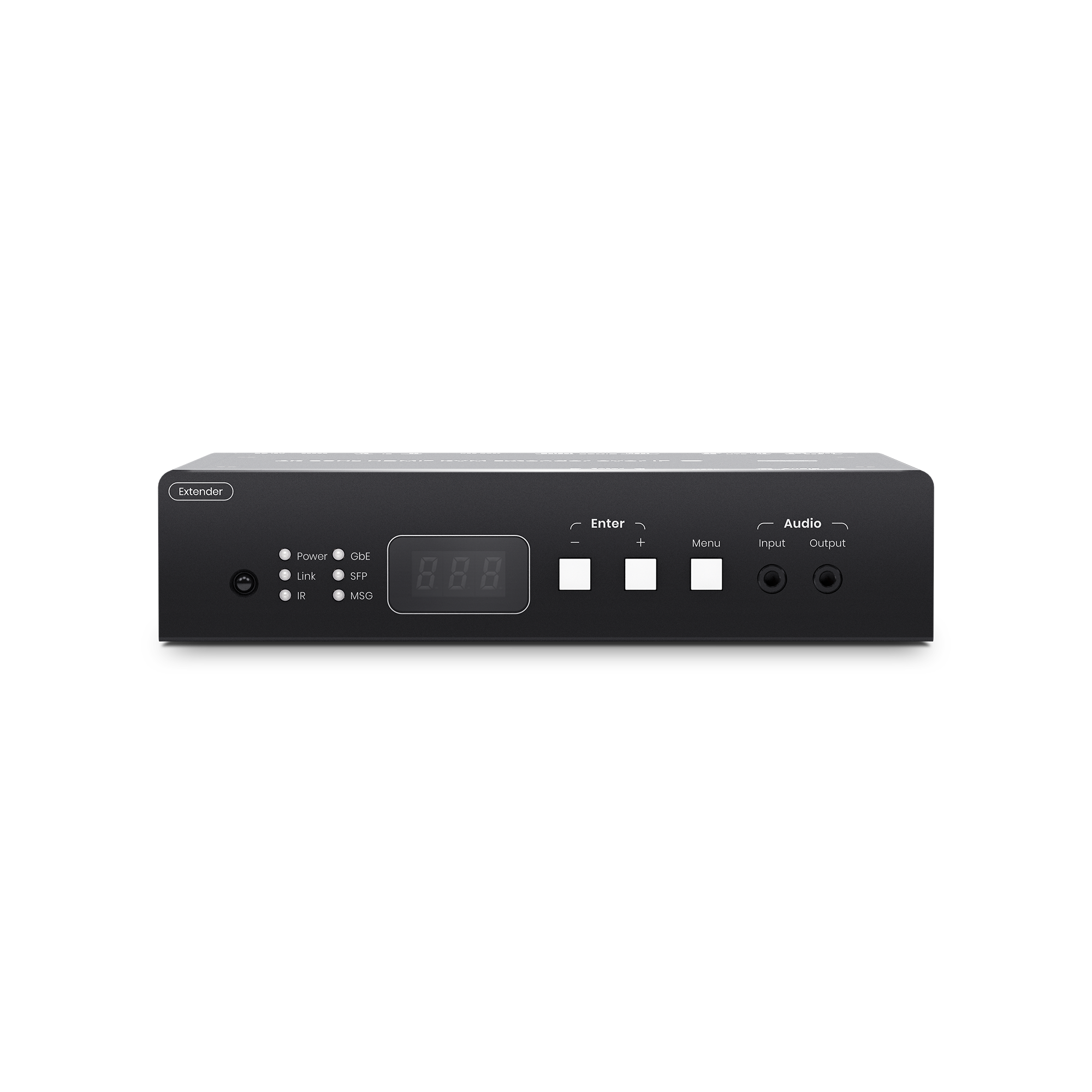
Physical site constraints, such as narrow conduits or long distances, often dictate the cable selection. SwiftSync products such as the HKM01-4K6G feature a dual-interface design to provide maximum field flexibility.

With one device supporting both interfaces, you can simplify your inventory and adapt to last-minute site changes without switching models.
Traditional compression often struggles with high-detail content like Excel spreadsheets or engineering drawings. SwiftSync preserves every detail; at 4K30Hz, the quality is virtually indistinguishable from uncompressed HDBaseT. Even at 4K60Hz 4:4:4, it maintains the sharp lines and color depth required for professional applications.
Latency is the primary obstacle in remote KVM operations. While H.264/265 can introduce significant lag (80ms–150ms), SwiftSync ensures a local experience.
At 4K30Hz, it is virtually zero-latency; and at 4K60Hz, the latency is kept below 40ms (0–3 frames), enabling smooth, real-time control for scrolling, switching, and command input.
Handling high-dynamic images is the true challenge of video transmission.
Standard H.264/H.265 often results in motion blur, tearing, or color bleeding when displaying fast-moving subjects.
SwiftSync handles fast-moving images such as sports broadcasts or industrial monitoring, without the tearing or blurring common in other formats. It preserves the integrity of every frame, ensuring smooth transitions and visually lossless results.

In AVoIP planning, bandwidth requirements dictate profitability and installation risk. While 10G solutions (such as SDVoE) offer high performance, they require expensive 10G hardware and sensitive cabling.
By utilizing standard 1 Gigabit infrastructure, SwiftSync provides a significant competitive advantage for project planning:

In real-world engineering, system integrators (SIs) frequently encounter complex electromagnetic environments, including power-line interference, radio-frequency noise, and environmental surges.
Engineered for stability and through meticulous circuit design, SwiftSync delivers interference resistance that far exceeds traditional transmission technologies:

In actual engineering cases, SwiftSync solves the most critical pain points:
At SC&T, we provide honest technical solutions designed to simplify your workflow. Our latest HKM01-4K6G Series is the culmination of SwiftSync 2.0 technology, offering 4K60Hz 4:4:4 performance with the reliability your projects demand.
Ready to see the SwiftSync difference? Explore our SwiftSync product list, or contact us.
Copyright © SC&T. All rights reserved. No part of this website may be reproduced or distributed without prior written permission.
A USB device may work normally when connected directly to a computer but stop working after a USB extender or KVM system is added.
AV requirements in a medical simulation center go beyond recording a training session. In addition to room camera feeds and audio, a session may require recording patient vital signs, ultrasound images, or displays from other equipment. Some content may need to be sent to a control room or observation area for live viewing and later used during debriefing.
PoE, PoE+, and PoE++ all carry network data and DC power over an Ethernet cable. The main difference is the amount of power they can deliver. Basic PoE works for many low-power devices, such as IP phones and some PoE IP cameras. PoE+ provides more power and is commonly used for PTZ cameras and wireless access points. PoE++ uses IEEE 802.3bt Type 3 or Type 4 to power network devices with higher power requirements.

1. All specifications are subject to change without notice.
2. Brand and product names mentioned are trademarks of their respective companies.
3. The terms HDMI, HDMI High-Definition Multimedia Interface, HDMI Trade dress and the HDMI Logos are trademarks or registered trademarks of HDMI Licensing Administrator, Inc.


