Evaluating AVoIP: What System Integrators Should Consider Before Deployment
System size alone does not determine whether AVoIP is the right fit. Before choosing an architecture, system integrators should define the application, signal distribution needs, expansion plans, existing equipment, network environment, and long-term support requirements. These factors help determine where AVoIP adds value and where a simpler extension and switching approach may be sufficient.
AV over IP (AVoIP) uses the network to distribute AV signals between devices and across multiple spaces. As systems grow to include more rooms, sources, and displays, AVoIP can make signal distribution and future expansion more flexible. That flexibility is most useful when it addresses a clear project need rather than being applied as the same architecture across every space.
What to Confirm Before Selecting AVoIP Equipment
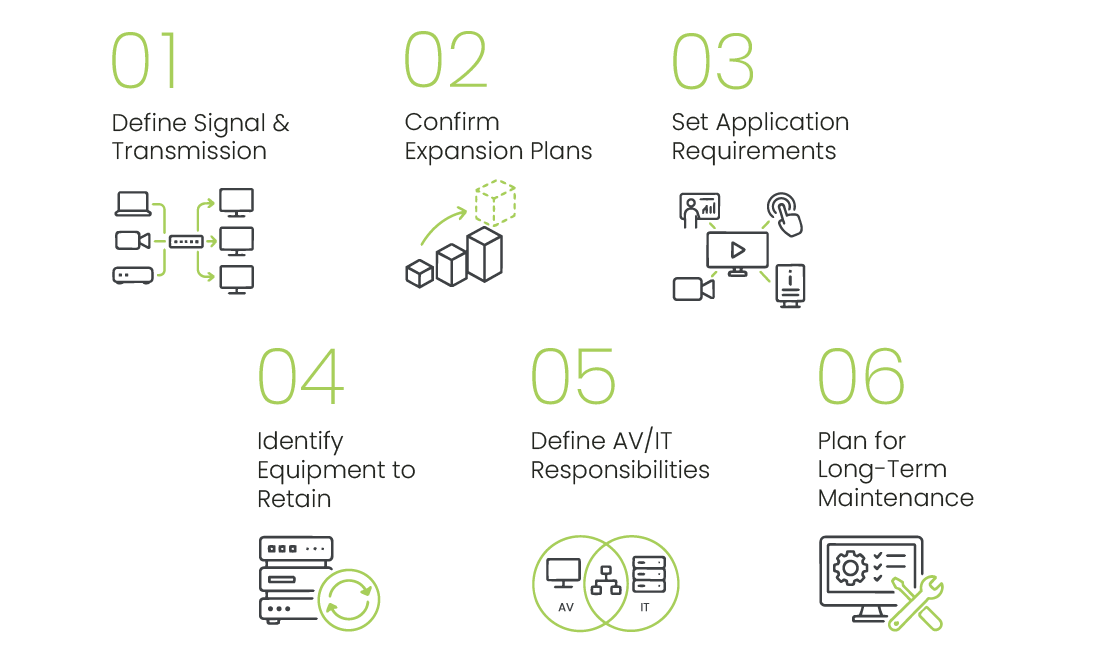
Before selecting the architecture and equipment, integrators can review six areas:
1. Confirm Signal Sources and Distribution Requirements
Identify the sources, displays, and their locations, and determine whether AV signals need to be distributed across rooms, floors, or other areas.
2. Confirm Future Expansion Needs
Review any known plans for additional rooms, sources, or displays. Planned expansion can be built into the design without adding complexity for needs that are still uncertain.
3. Define Application Requirements
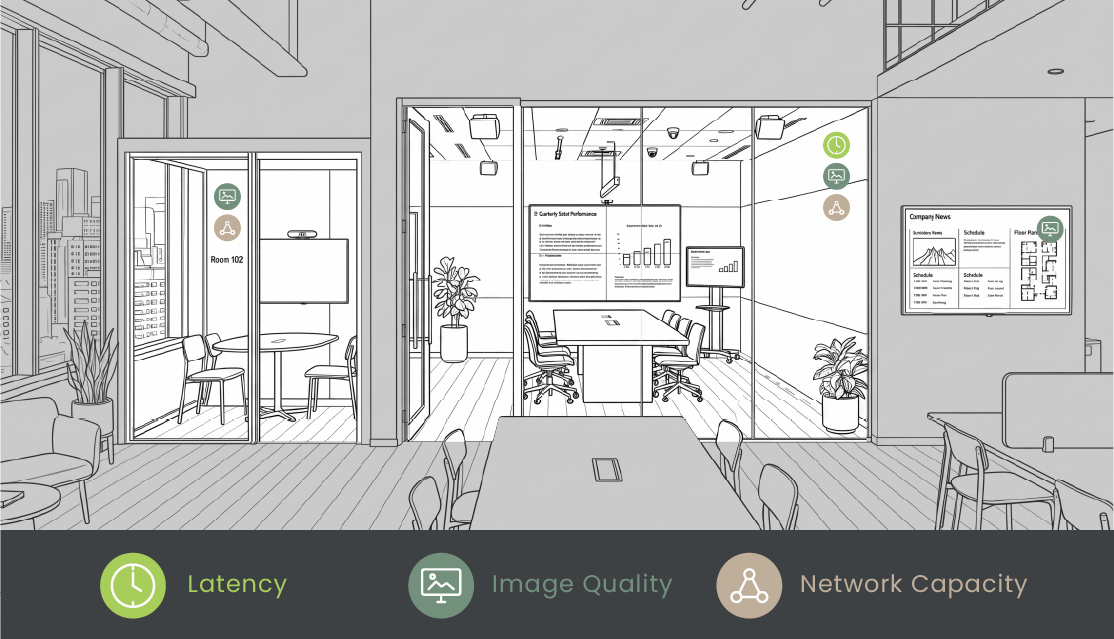
Determine the required image quality, latency, and network conditions based on how the system will be used. Control, interactive applications, live production, and information display may place different demands on AV transmission.
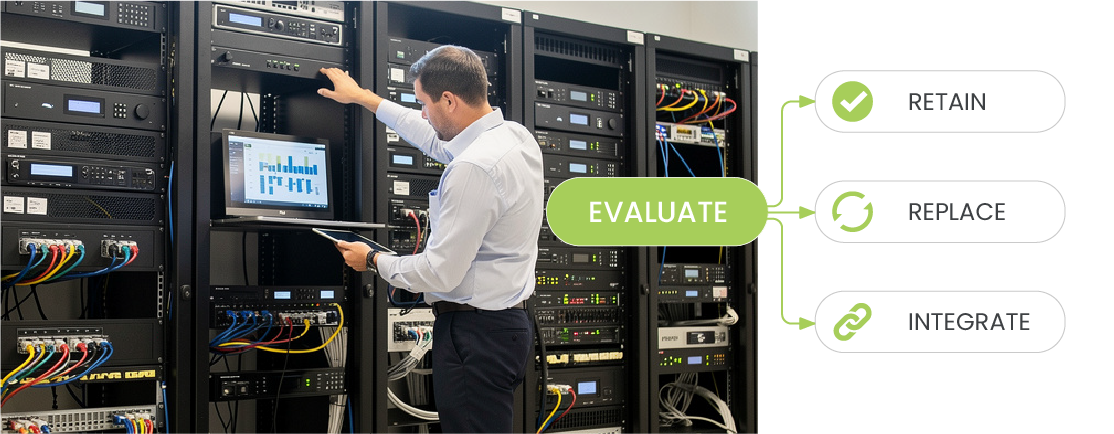
4. Identify Existing Equipment to Retain
Determine which devices will remain in service and whether they can work with the new system. For phased upgrades, each stage should also leave the system operational.
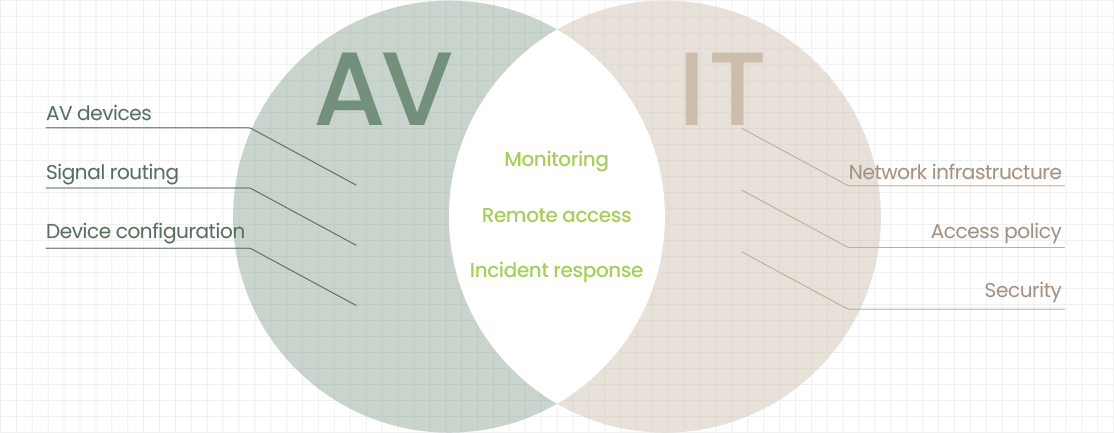
5. Define AV and IT Responsibilities
Confirm network management, device access, remote support, centralized monitoring, and security requirements, as well as who is responsible for initial troubleshooting.
6. Plan for Long-Term Maintenance
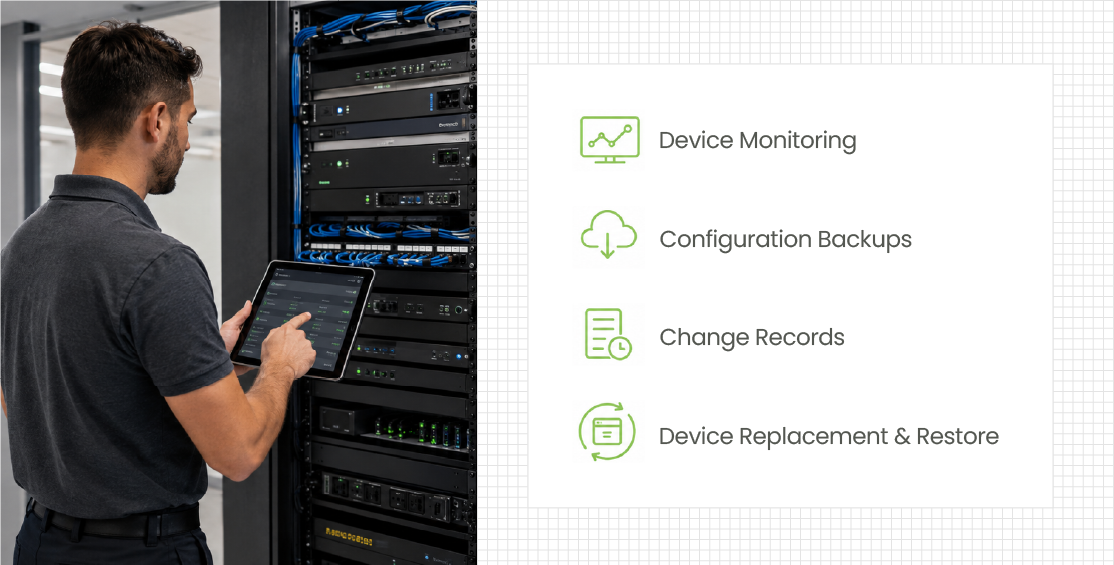
Define how devices will be monitored, configurations backed up, failed equipment replaced, and system documentation maintained after handover.
The following sections explain how these conditions can affect the AVoIP architecture and equipment selection.
Plan the AV Architecture for Future Expansion
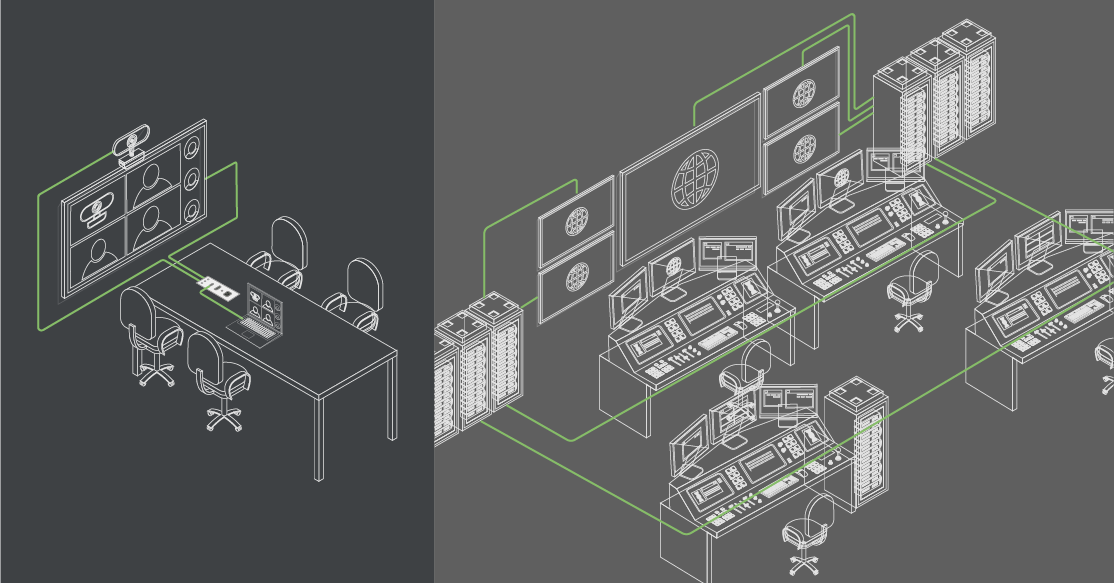
AV systems built around fixed inputs, outputs, and cabling can work well when the system size and usage remain stable. As more rooms, sources, or displays are added, the equipment layout, available inputs and outputs, and cabling may also need to change. Without early planning, even adding a display or changing a signal destination can require changes to the existing system.
AVoIP makes it easier to add devices or reroute signals without major changes to existing cabling. This can be especially useful in multi-room or multi-floor projects where additional spaces or devices are already planned.
Early planning should cover both current needs and expected changes. If new rooms, devices, or signal sharing between areas are already planned, they should be included in the design from the beginning.
Different Spaces May Require Different AV Architectures
Not every space in a project needs the same AV architecture. Rooms with multiple sources and displays, or spaces that need to share signals across different areas, may benefit from AVoIP. A single room with a limited number of signals and a stable setup may only need signal extension and switching.
A larger project can therefore use different transmission methods across different spaces. The choice depends on how each space is used, how many sources and displays it supports, how far signals need to travel, and whether future expansion is expected.
Transmission Requirements Vary by Application
Two AV systems of a similar size can have very different transmission requirements. Real-time control, interactive applications, and live production are generally more sensitive to latency, while information display applications may be less sensitive to delay. Image quality and available network capacity also need to be considered.
AVoIP planning should go beyond the number of sources and displays. Integrators need to understand how the system will be used, whether real-time interaction is involved, what image quality is required, and whether the existing network can support it. This helps define both the AV design and the network resources needed to support it.
Plan for Existing Equipment in Retrofit Projects
Moving to AVoIP does not mean every existing device has to be replaced. In retrofit or phased upgrade projects, displays, sources, control systems, and existing transmission equipment may still need to remain in service. Integrators should confirm early whether these devices can work with the new system.
If they cannot be integrated directly, additional conversion equipment may be needed. In some cases, equipment that is still operational may have to be replaced earlier than planned, adding cost or affecting the upgrade schedule.
In a phased upgrade, the system also needs to remain operational between stages. Identifying what can stay in service and how the existing and new systems will work together can reduce disruption and avoid unnecessary replacement.
Define AV and IT Responsibilities Before Deployment
When AV signals are carried over an enterprise network, network policies also affect how AV devices are accessed, monitored, and managed. Centralized monitoring and remote support, for example, may depend on existing access controls and security requirements. If a separate AV network is used, its impact on remote access and centralized management should also be understood in advance.
Before installation, AV and IT teams need to agree on who manages the network, what access AV devices require, whether remote connections are permitted, and who handles initial troubleshooting when an issue occurs.
Integrators still need a working knowledge of networking, security, and system design so they can work effectively with the IT team. Resolving these questions early can reduce network or system changes during installation and commissioning.
Plan for Long-Term Maintenance During System Design
AVoIP planning should also cover how the system will be supported after deployment. As the number of devices and spaces grows, support teams need to monitor device status, track configuration changes, and quickly identify the source of a problem. Replacing a failed device and restoring its configuration should also be straightforward.
Device naming, configuration backups, change records, replacement procedures, and system documentation should be established before handover. If centralized monitoring or remote support is required, those workflows should also be defined during system design.
Planning for maintenance early can simplify troubleshooting and reduce the support effort required as the system expands.
Conclusion | Use AVoIP Where It Adds Value
AVoIP can provide greater flexibility for signal distribution and system expansion, but system size alone does not determine whether it is the right choice. Application requirements, existing equipment, network infrastructure, and long-term maintenance all need to be part of the planning process.
For system integrators, the decision starts with how the system will be used, how it may expand, and how it will be managed after handover. With those requirements defined, integrators can decide where AVoIP adds value and where a simpler transmission method is sufficient.
AVoIP delivers the most value when the project genuinely benefits from its flexibility and scalability.
Original Video
AVWeek 713 | AV Ability
Content Reference Note
This article draws on the discussion in AVWeek 713 and extends it from the perspective of system integrators, with a focus on AVoIP planning, deployment, and long-term maintenance.
It is not a transcript, full translation, or section-by-section summary of the episode. Some of the analysis and practical recommendations reflect SC&T’s editorial interpretation based on broader industry research.
Thank you ! Your request has been accepted. We’re looking forward to getting in touch with you. You can expect our response within 3 days. If not, please double check your spam folder.
Oops! Something went wrong while submitting the form.
Thank you ! Your request has been accepted. We’re looking forward to getting in touch with you. You can expect our response within 3 days. If not, please double check your spam folder.
Oops! Something went wrong while submitting the form.
Thank you ! Your request has been accepted. We’re looking forward to getting in touch with you. You can expect our response within 3 days. If not, please double check your spam folder.
Oops! Something went wrong while submitting the form.
Thank you ! Your request has been accepted. We’re looking forward to getting in touch with you. You can expect our response within 3 days. If not, please double check your spam folder.
Oops! Something went wrong while submitting the form.
Cookies Consent
We aim to enhance your experience on our website and would love your help to do so!
By accepting the storage of cookies, you assist us in analyzing website usage and refining our marketing strategies. We use cookies only to enhance your browsing experience and remember your preferences on this site.
You have full control over your cookie settings and can modify them anytime in the Privacy Preference Center. For a comprehensive understanding of how we protect your privacy, please refer to our privacy policy.



.png)